

Innovation Framework Overview
An overview of the framework guiding how Curaçao can coordinate innovation priorities across sectors and institutions.
ReportMar 7, 2026
Curaçao 311 lets anyone flag a pothole, a leaking pipe, or an expired product with a photo and a tap. Built by a small volunteer foundation, it is quietly replacing paper-based complaint processes across the island.
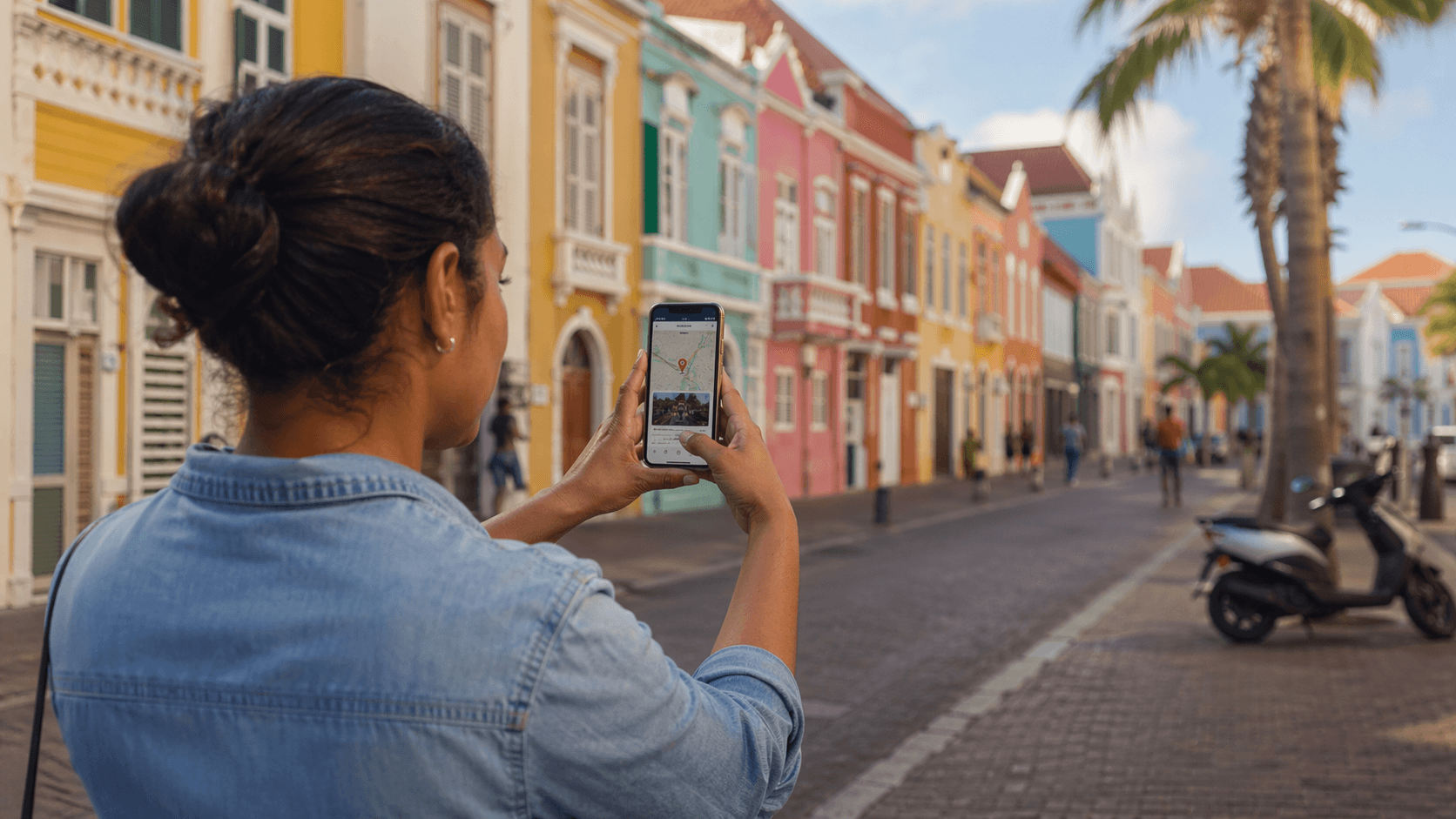
A small foundation of five volunteers has built the digital layer that Curaçao's complaint-handling processes were missing. Curaçao 311 is a free mobile and web application that lets residents photograph, geotag, and submit everyday civic issues to the agencies responsible for fixing them. Instead of a phone call lost to a busy line, a paper form filed in a drawer, or an email never acknowledged, a citizen now gets a tracked case with a public ID and a resolved notification when the work is done.
The app matters beyond its convenience. It is one of the most visible pieces of citizen-facing digital infrastructure to emerge from Curaçao's smart-nation agenda, and it was assembled mostly by volunteers, on top of open-source tools, without a large government procurement. That makes it unusual, and useful, as a model for how small island states can build practical civic tech without waiting for a megaproject. The story below reconstructs what is publicly known about how Curaçao 311 came together, how it works, and what has, and has not, been proven about its impact.
Before Curaçao 311, a resident who spotted illegally dumped waste, a broken streetlight, or produce past its expiration date had limited options. They could call the relevant ministry or agency, write a letter, or walk in to file a form. The team behind Curaçao 311 has described this workflow bluntly in the context of a sister project, Checkin Curaçao, which they built in 2020 to replace paper check-in sheets at restaurants during the pandemic. At the time, the foundation noted that proprietors had nothing but pen and paper or some Excel sheets to work with, and that the app let them comply with government requirements without having to deal with scraps of paper. That same diagnosis, paper, scattered spreadsheets, and no shared view of what had been reported or resolved, applies to the broader complaint-handling landscape that Curaçao 311 set out to improve.
Three weaknesses are worth naming. First, a paper or email-based report is invisible to everyone except the person who filed it and, perhaps, the person who received it. There is no way for a citizen to know whether a complaint has moved, been routed, or closed. Second, without structured data, ministries cannot aggregate reports to see patterns, for example which neighborhoods generate the most illegal dumping, or which streets accumulate the most bulky waste. Third, accountability is effectively voluntary. If nothing gets fixed, the complaint simply disappears. A digital reporting platform attacks all three weaknesses at once by making reports persistent, categorized, and visible.
The organization behind the app is the Smart Mobility Caribbean Foundation (SMCF), which presents itself on the web as SmartCaribbean. Its five founders first met in October 2018 at an event organized by the Curaçao Innovation and Technology Institute (CITI), the non-profit that runs much of the island's innovation programming on behalf of the Ministry of Economic Development. The five carry complementary backgrounds that show up clearly in the product:
SMCF was formally founded in 2019. Its stated vision, published on the SmartCaribbean site, is to work with organizations, stakeholders and the government to improve the quality of life of citizens by implementing Smart City solutions, especially with regards to Smart Mobility, into everyday lives. Curaçao 311 became the foundation's first public project and its flagship demonstration of that vision.
The idea was sharpened in public competition. SMCF's concept for the platform took second prize in the "Government Solutions" category at the Curaçao Innovathon, jointly organized by the Ministry of Economic Development (MEO) and CITI. Later in the same year, the completed project won the CITI Curaçao Innovation Award 2019.
The app went live on the Apple App Store on 23 September 2019 with version 0.9.8. Within roughly two months, a full redesign landed as version 1.0.1 in November, and by February 2020 the app had introduced anonymous reporting and the ability for users to mark their own reports as solved. The concept was also workshopped at the Curaçao Tech Meetups, which ran an intensive hackathon to bring the Curaçao 311 app to the next level in August 2019, spreading development work across five venues including the Central Bank of Curaçao.
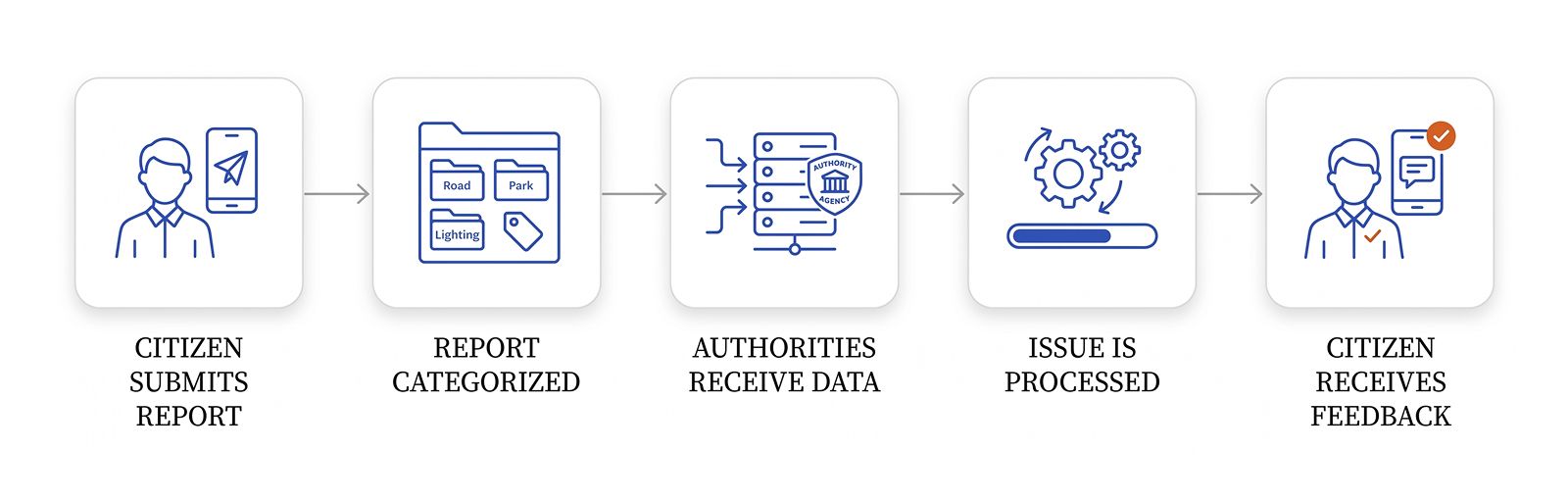
The user flow is deliberately simple. A resident opens the app, takes a photo of an issue, tags the location, chooses a category so the report goes to the correct agency, and submits. Submissions can be attached to the user's name or filed anonymously, a choice that matters for sensitive reports such as illegal dumping or food-safety complaints. Reports get a public ID and a status that can move from open to resolved. When the responsible authority closes a case, the user receives a notification.
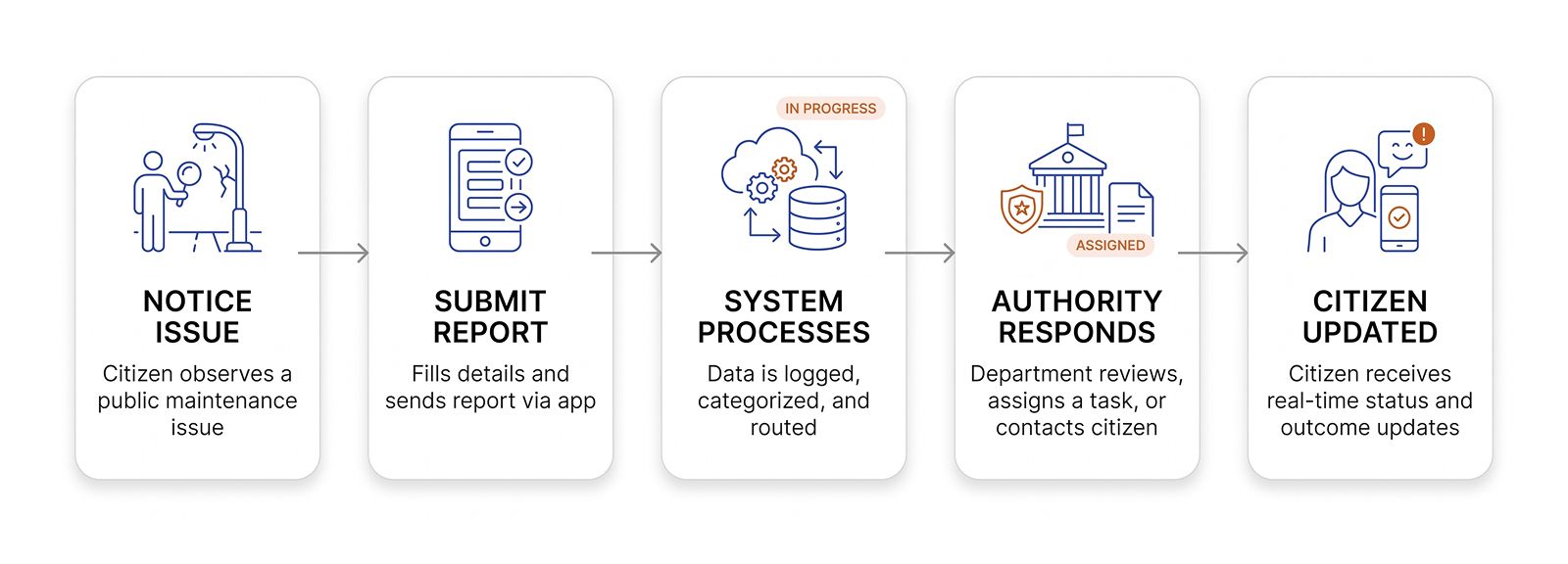
On the back end, partner agencies and companies have access to an admin portal where they receive reports routed to them by category. From the agency's perspective, the app is a structured inbox of geotagged, photographed, pre-classified cases, the opposite of the loose slips of paper and inconsistent emails problem that the foundation has described.
The list of categories has grown with the partnerships. The App Store release history shows how this happened, step by step:
That progression reads like a partnership roadmap. Each new category reflects a new agency signing on to route and resolve reports. Publicly reportable categories now include litter in public spaces, vandalism, leaking water pipes, stray animals, illegal dumping, accessibility of buildings for people with disabilities, expired food items in supermarkets, bulky waste, dead animals, and police matters.
The technology stack specific to Curaçao 311 has not been publicly disclosed in detail. Blinq Web Studio Curaçao B.V. is credited as publisher and copyright holder on the Apple App Store. The foundation's sibling app, ABC Curaçao, built with the public bus operator in 2021, is on record as using only open-source components with OpenStreetMap for maps and geocoding. Joost Schrier explained the stance plainly in the ABC launch press release:
"We believe that Open Source is the future when it comes to software development, especially for Small Island Developing States like Curaçao. It allows (young) people to start developing beautiful, useful software without having to invest a ton of money in the tools."
Whether Curaçao 311 uses an identical stack is not confirmed in public sources, though the foundation's open-source commitment and its reuse of the 311 platform to power Checkin Curaçao both suggest a shared technical base. Data handling is described on the app's privacy page as being overseen by the Smart Mobility Workgroup, which the foundation says is committed to data security and the proper, secure processing of personal information of its apps' users and websites' visitors.
The public-facing copy on curacao311.com and in the app store describes the philosophy behind the platform in one paragraph:
"Curaçao 311 is a platform for citizens by citizens to help accelerate the application of solutions for our everyday problems. The first step towards solving a problem is to recognize, take notice, assess and document it. With the use of technology, it is now easier for all citizens to help gather important data and participate into this very first step towards bringing more solutions into our everyday lives. After all, it is up to ourselves to take care of this beautiful island we call home."
Two design choices translate that philosophy into the product. The first is anonymous reporting, which lowers the barrier for residents who worry about social or professional repercussions. The second is the public resolved notification, which tries to close the accountability loop that paper-based workflows leave open. A public report page, for example one indexed at curacao311.com/report/757 showing a Food Safety case resolved on 21 February 2020, functions as a lightweight transparency artifact. Anyone can see that the report existed, what it was about, and that it was closed.
The foundation did not stage a single, high-profile launch event for Curaçao 311. The app went live quietly on the stores in late 2019 and grew feature by feature as more agencies came on board. Public coverage has come mostly from semi-governmental channels, including What's Cooking in Curaçao, a Ministry of Economic Development-adjacent promotional site, and Willemstad Smart City, which republishes SMCF's press output. The approach has been incremental rather than publicity driven, and it has relied on CITI's ecosystem, the Innovathon, and tech meetups for visibility.
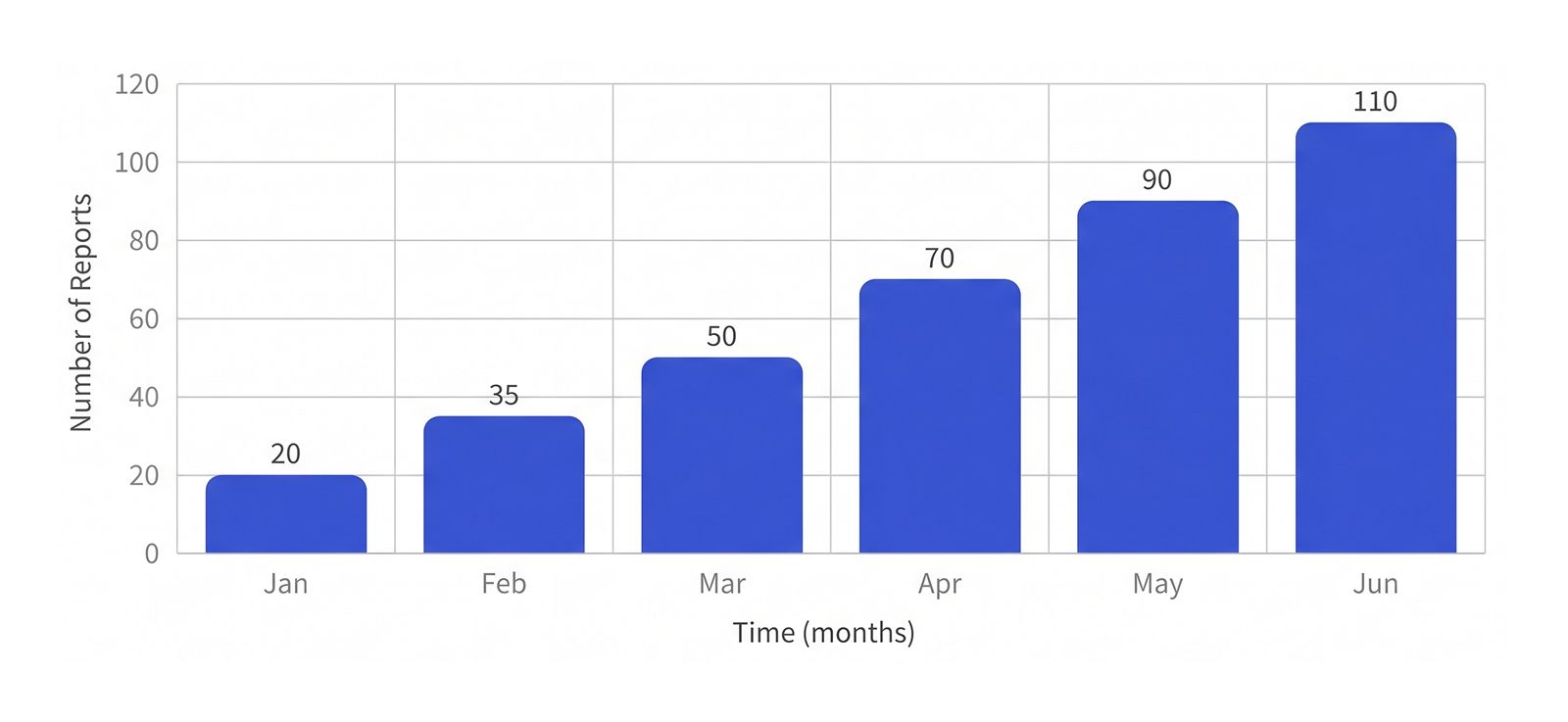
Hard adoption metrics are not published. SmartCaribbean and Curaçao 311 do not disclose download counts, number of reports filed, resolution times, or the breakdown of which categories are most reported. The only quantitative breadcrumb in public view is the report ID seen on the February 2020 resolved case, which implies that at least several hundred reports had been filed within the platform's first several months of operation. That number should not be taken as a verified metric. It is simply what the public URL structure suggests.
What can be said with confidence is that the platform has been durable. It has been live for over six years, has added agency partners over time, and has spawned reusable infrastructure. The Checkin Curaçao app, deployed during the pandemic, is explicitly described as powered by Curaçao 311, meaning the 311 platform has effectively become a reusable civic-tech backbone that the same team can extend for new use cases when the government asks.
Curaçao 311 is not a single government contract. It is a set of bilateral working relationships between SMCF and individual agencies. Release notes and category structure confirm that the platform routes reports to, at minimum, MEO for food safety, VVRP for public-works and traffic issues, Selikor for bulky waste and dead animals, and the national Police for police-related reports. Specific accessibility, water, and stray-animal categories imply further institutional hand-offs that SMCF has not named publicly.
Ministerial engagement has come through adjacent projects. At the launch of the ABC Curaçao bus app in 2021, both Minister of Traffic, Transport, and Urban Planning Charles Cooper and Minister Ornelio Martina attended and received an on-the-ground presentation from Luigi Scuotto. That is indirect evidence rather than an official endorsement of 311, but it illustrates how SMCF has cultivated access to ministry leadership through a portfolio of smart-mobility work rather than a single product push.
The honest assessment of Curaçao 311's impact has two parts. The measurable part is modest but real. The platform has won the CITI Curaçao Innovation Award 2019, a second prize at the Innovathon, ministerial attention to the foundation's work, and six years of continuous operation with expanding category coverage. It has been reused as infrastructure for an emergency pandemic tool. It has given at least four major agencies a structured digital intake for citizen reports where previously there was none.
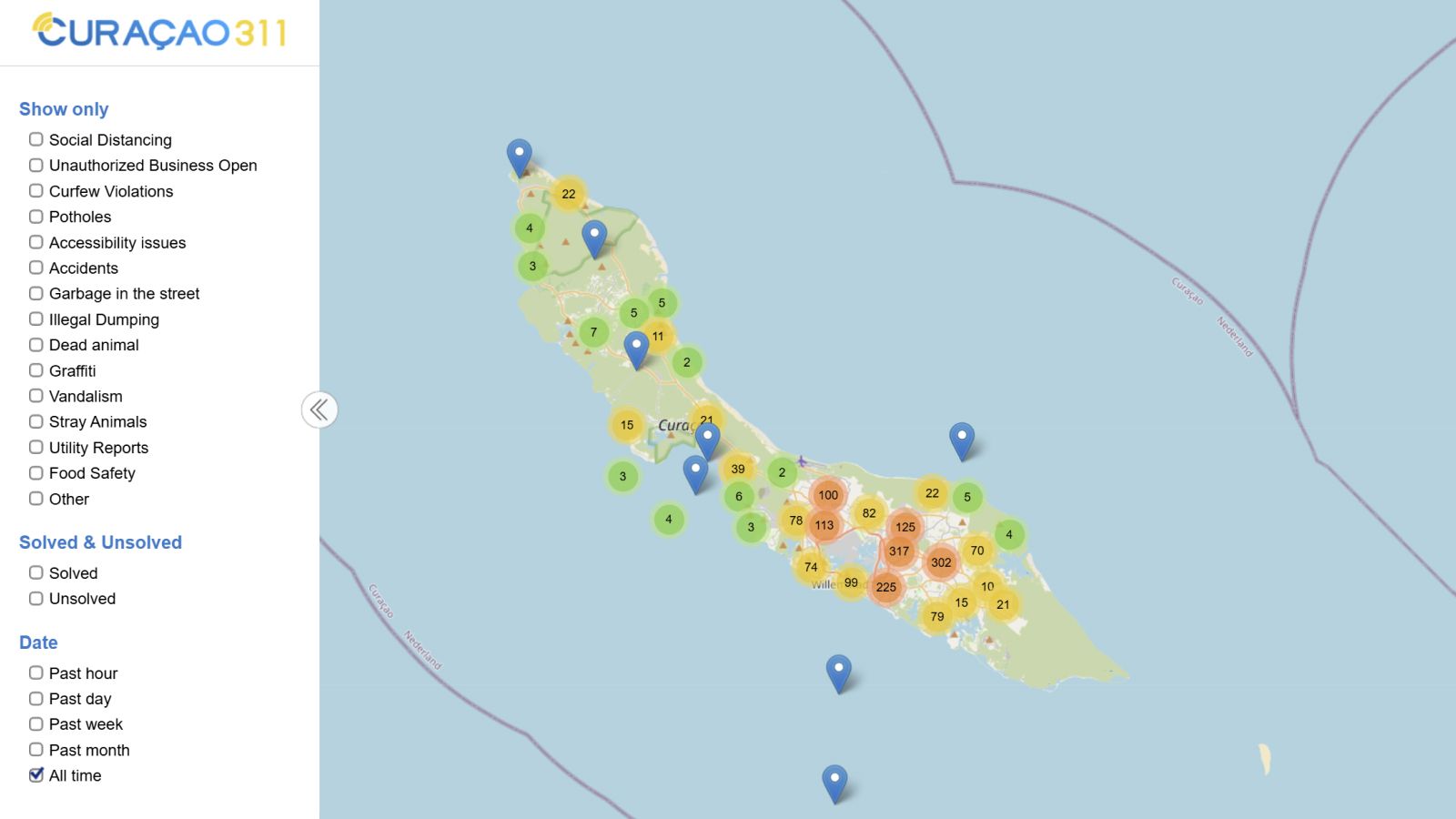
The second part is what cannot yet be demonstrated in public. There are no published statistics on adoption, resolution times, or the categories of issues most reported. There are no citizen testimonials or ministry-published efficiency gains attributable to the platform. There is no peer-reviewed or GovTech-press case study of the app. For a project aimed at transparency, the lack of public outcome metrics is a gap worth closing, and one that the Curaçao Innovation Hub and its partners could reasonably push the foundation to address.
Even with those gaps, several lessons come through clearly from the Curaçao 311 story.
The first is that a small volunteer team with complementary skills can ship and sustain civic infrastructure if it has the right entry points. SMCF's founders did not wait for a ministry to commission them. They formed a foundation, entered a public Innovathon, won enough recognition to open doors, and then grew the product partner by partner.
The second is that the ecosystem did the work of a procurement system. CITI, the Innovathon, MEO, the Curaçao Tech Meetups hackathons, and Willemstad Smart City's communication channels provided validation, feedback, distribution, and access to ministerial partners. A civic tech product that would have required a formal tender in a larger jurisdiction emerged from a lightweight public-private lattice.
The third is that open source and reusable platforms multiply civic-tech investment. Curaçao 311 became the base for Checkin Curaçao, which in turn solved a pandemic-era problem in weeks rather than months. The same platform thinking, if extended, could support future apps for areas such as tourism, public-health reporting, or utility outages without starting from scratch.
The fourth is a candid observation. Transparency tools need to be transparent about themselves. A reporting platform whose whole premise is visibility would be strengthened by publishing, even in summary form, how many reports it has handled, which categories dominate, and how long resolution takes. That dashboard, which the platform's own data already supports, would move the impact story from anecdote to evidence.
The founders have spoken about extending Curaçao 311's reach to Aruba and Bonaire, which would make it the first pan-Dutch-Caribbean citizen reporting system. SMCF's own trajectory, from 311 to check-ins to buses to smart bus stops, suggests a broader civic-platform ambition rather than a single product. If the Curaçao Innovation Hub and its ecosystem partners want a benchmark for what lightweight, volunteer-led civic tech can look like in a small island state, Curaçao 311 is the clearest homegrown example on offer. The next chapter will depend on whether the platform's operators and its government partners are willing to share the data that would let outsiders see exactly how well it works, and where it can still be improved.
Related resources
Discover a growing collection of insights, reports, and resources supporting innovation across Curaçao.
Join the CIH network to support the innovation ecosystem and reach your goals.
